
Weight Loss for Men with Diabetes: A Safe and Practical Indian Guide
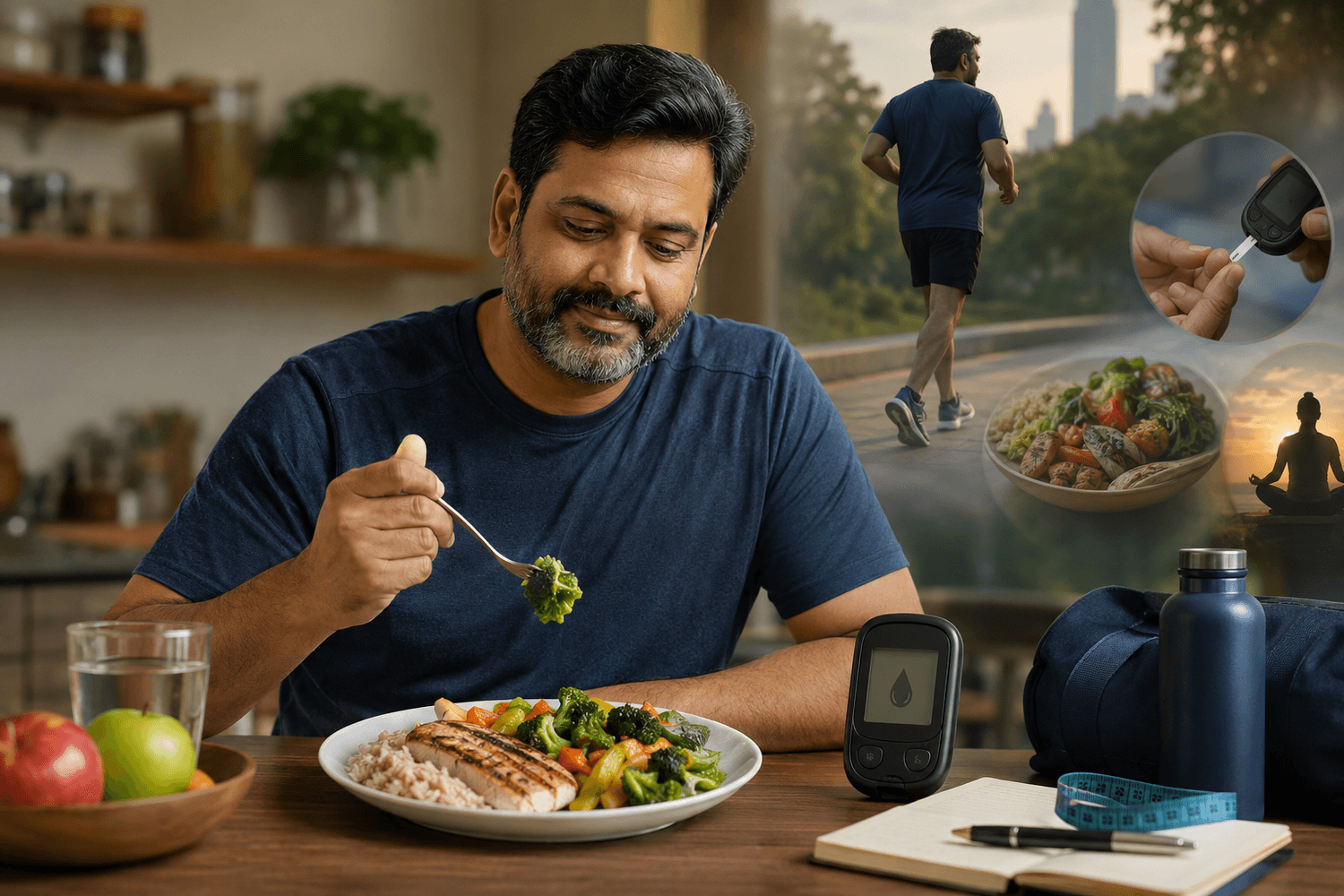
Somewhere between a relative telling you to give up rice completely and a YouTube video promising to “reverse diabetes in 30 days,” most men with Type 2 diabetes just want a straight answer: what's actually safe to eat, how much should I exercise, and will any of this really help?
Fair questions. And the honest answer is a little less dramatic than the internet makes it sound.
Weight loss for men with diabetes works best when it's gradual and built around habits you can actually keep up - not a diet you white-knuckle through for two weeks.
Research backs this up too: sustainable, moderate weight loss can genuinely help with blood glucose management for a lot of people with Type 2 diabetes. But there's no single eating plan that works for everyone, because your body, your medication, and your daily routine aren't the same as the next person's.
One more thing before we get into it - this article is meant to inform, not replace your doctor. Nothing here should be read as a personal treatment plan. If something in this guide doesn't match what your doctor has told you, go with your doctor.
Why Weight Management Matters in Type 2 Diabetes
Let's start with what's actually happening inside the body, because it explains why your doctor keeps bringing up weight.
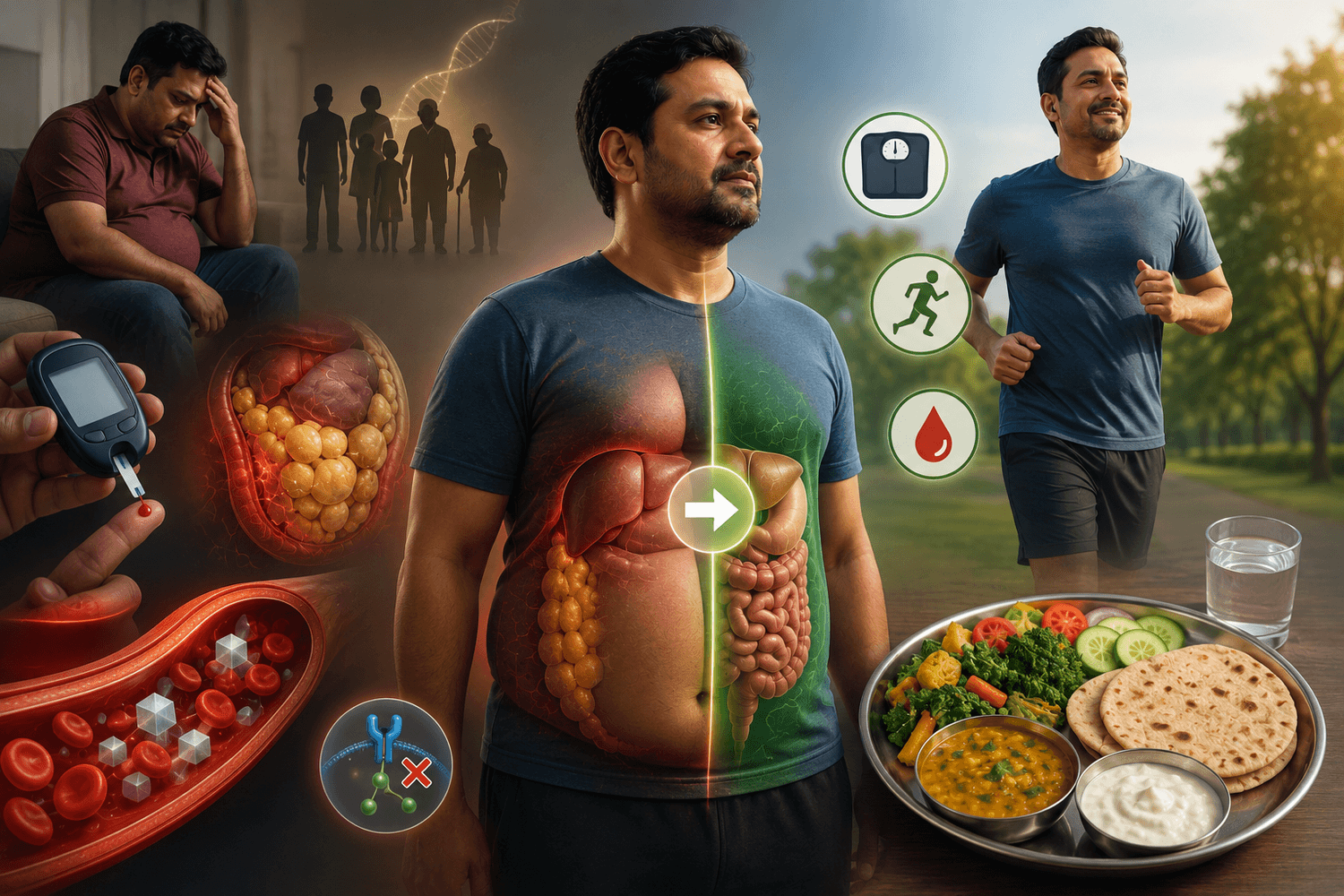
Type 1 diabetes, Type 2 diabetes, and prediabetes get lumped together a lot, but they're not the same thing. In Type 1, the immune system stops the pancreas from making insulin altogether - weight usually isn't the trigger here. Type 2 is different: the pancreas is often still making insulin, but the body stops responding to it properly. This is insulin resistance, and it's the main reason blood sugar climbs.
Here's where weight comes in. Extra fat, especially around the belly, makes insulin resistance worse - it interferes with how well insulin can move glucose out of your blood and into your cells. Globally, obesity is believed to be behind a significant share of Type 2 diabetes cases, and diabetes was linked to more than a million deaths worldwide in 2021, according to the World Health Organization.
That doesn't mean weight is the only piece of the puzzle - genetics, age, and family history all play a part too, and some people develop Type 2 diabetes without being overweight at all. But for many men who are carrying extra weight, losing even a moderate amount can make a real difference to how the body handles insulin.
Studies backed by the U.S. National Institute of Diabetes and Digestive and Kidney Diseases (NIDDK) have shown that people who achieve meaningful, sustained weight loss often see noticeably better blood glucose control - and some, particularly in the earlier years of the disease, reach remission, meaning their blood sugar stays in a healthy range without medication.
Worth being upfront about: remission isn't guaranteed, and it isn't a cure. It's a possibility for some people under the right circumstances - which is exactly why the next section matters.
Speak to Your Doctor Before Starting
Before you change your plate or your routine in any big way, it's worth having a quick word with your doctor — especially if any of these apply to you:
You're on insulin or glucose-lowering medication — changing what or when you eat, or how much you move, can shift your blood sugar in ways that might need your dose adjusted.
You have heart disease — your doctor can help you pace a new exercise routine safely.
You have kidney disease — protein and certain minerals often need to be personalized.
You have neuropathy (nerve damage affecting your feet) — this changes what kind of exercise makes sense.
You have foot ulcers, diabetic eye disease, or frequent low blood sugar episodes.
You haven't exercised in years — starting slow and safe matters more than starting fast.
None of this is meant to scare you off. It's meant to save you from a setback three weeks in. A five-minute conversation now can prevent a much bigger problem later.

Set a Safe and Realistic Goal
Everyone wants fast results - that's just human nature, and the internet's “lose 10 kg in a month” posts don't help. But crash diets rarely stick, and for someone managing diabetes, they can throw blood sugar around in ways that are hard to predict.
The research points the other way. NIDDK studies suggest that even a modest, gradual drop in body weight - the kind that happens over months, not days — can meaningfully improve how your body responds to insulin.
We're not going to hand you a kilogram target here, because honestly, that number should come from your doctor or a registered dietitian who knows your current weight, your labs, and your medication.
What we can tell you with confidence is this: a slightly smaller portion at dinner, a daily walk, better sleep - these boring, unglamorous habits tend to beat dramatic short-term diets in the long run, every time.
Diabetes-Friendly Indian Plate Method
If you want one thing to actually remember from this article, make it this: the plate method. It's recommended by the American Diabetes Association, it doesn't need you to count a single calorie, and it works whether you're eating at home, at your desk, or at a wedding.
Picture a regular dinner plate, about 9 inches across:
Half the plate — non-starchy vegetables
A quarter — a good protein source
A quarter — a quality carbohydrate
On the side — water or an unsweetened drink
Foods to Choose More Often
| Category | Indian Examples | Why It Helps | Watch Out For |
|---|---|---|---|
| Vegetables | Lauki, bhindi, tori, palak, methi | Low calorie, high fibre | Too much oil/frying |
| Protein | Eggs, fish, chicken, dal, tofu, paneer | Keeps you full, preserves muscle | Creamy gravies, extra ghee |
| Carbohydrates | Whole wheat roti, brown rice, oats, millets | Slower glucose release | Portion still counts |
| Fats | Peanuts, almonds, mustard/groundnut oil | Supports heart health | A handful, not a bowlful |
| Fruit | Guava, apple, papaya, orange | Fibre + natural sweetness | Skip the juice |
Foods and Habits to Limit
Nothing here needs to disappear from your life forever — that kind of thinking usually backfires anyway. But a few things are worth being more careful with: sugary drinks and packaged juices, which spike blood glucose fast; mithai and sweets, fine occasionally in small amounts rather than a total ban that leads to bingeing later; namkeen, chips, and fried snacks eaten frequently; oversized portions even of healthy food; alcohol, which adds calories and can cause delayed low blood sugar; and late-night snacking out of habit rather than hunger.
One that surprises a lot of people: “diabetic” biscuits and sweets sold in shops. Many still carry real calories and carbs — always check the label instead of trusting the word “diabetic” on the packet.
Sample One-Day Indian Meal Framework
This is an example framework, not a prescription — no fixed calorie or carb count attached, and it won't be right for every reader. Use it as a starting idea, then personalize the portions with your doctor or dietitian.
| Meal | Vegetarian | Non-Vegetarian |
|---|---|---|
| Breakfast | Vegetable oats or besan chilla | Two boiled eggs with multigrain toast |
| Lunch | Roti, dal, sabzi, salad, curd | Roti, grilled fish or light chicken curry, salad |
| Evening | Roasted makhana or nuts, unsweetened tea | Roasted makhana or nuts, unsweetened tea |
| Dinner | Vegetable-dal khichdi or roti with paneer bhurji | Roti with light chicken or egg curry |
Exercise for Men with Diabetes
Movement genuinely helps — with weight, with blood sugar, with how you feel by the end of the day. But it works best when you ease into it rather than throwing yourself at a gym program on day one.
The CDC recommends around 150 minutes of moderate activity a week — roughly 30 minutes most days — but it's completely fine to start with a 10-minute walk after dinner and build from there. Basic resistance work — bodyweight squats, wall push-ups, a light resistance band — done a couple of times a week, helps preserve muscle, which in turn supports better blood sugar control over time. If you've been inactive for a while, increase gradually rather than jumping straight into anything intense.
Small things matter too. If you sit at a desk all day, get up and move for a few minutes every half hour. Warm up before exercise and give yourself proper recovery time. Wear shoes that actually fit and check your feet afterward — this matters more if you have any nerve-related numbness. Stay hydrated. And if you're on insulin or medication that can drop your blood sugar, keep a fast-acting sugar source on hand — glucose tablets, or even a small sweet — and check your blood sugar before and after activity if your doctor has told you to.
If you take insulin or anything that lowers blood glucose, it's genuinely worth a quick check-in with your doctor before ramping up your activity — timing and intensity can change how much medication you need.
How to Track Progress Beyond the Weighing Scale
The scale can be misleading, and it's often the reason people give up too early. Weight fluctuates for a dozen reasons that have nothing to do with fat loss — water retention, meal timing, even how well you slept.
A few better things to pay attention to: your waist measurement, your energy levels through the day, how consistent you've been (not perfect, just mostly on track), your sleep, whether you can walk further or lift a little more easily than a month ago, and of course your glucose readings and lab reports, tracked the way your doctor has advised.
Diabetes management rarely moves in a straight line, and judging yourself only by the number on the scale each morning is a good way to feel discouraged over nothing.
Common Weight-Loss Mistakes in Diabetes
Skipping medication to “let the diet do the work” — please don't; this can be genuinely dangerous.
Copying a diet plan off Instagram or YouTube without factoring in your own medication or health conditions.
Extreme fasting without medical supervision.
Cutting out carbs completely on your own, without guidance.
Relying on supplements or “fat burner” pills, most of which are unregulated and unproven.
Drinking fruit juice instead of eating the fruit itself.
Ignoring sleep and stress.
Pushing through a workout despite feeling dizzy or unusually weak.
When to Stop and Seek Medical Advice
Stop what you're doing and get medical help if you notice: sweating, shaking, confusion, unusual weakness, dizziness, or a racing heartbeat (possible signs of low blood sugar); chest pain; fainting or feeling close to it; severe breathlessness; confusion or trouble thinking clearly; vomiting that won't stop; a foot wound that isn't healing; or blood glucose readings that are unusual for you.
If you're ever unsure whether something counts as an emergency, treat it as one. It's always better to call your doctor and be told it's nothing than to wait it out and be wrong.
Frequently Asked Questions
Can weight loss cure or reverse diabetes?
It's not a guaranteed cure. Some people — especially earlier in the disease — reach remission through significant, sustained weight loss, but this varies from person to person.
Is intermittent fasting safe for people with diabetes?
It can be risky, particularly on insulin or glucose-lowering medication, due to the hypoglycemia risk. Only try this under medical supervision.
Should carbs be cut out completely?
No — most people don't need to eliminate carbs entirely. This should be worked out with a doctor or dietitian.
Is walking enough to get started?
Yes, walking is a genuinely solid starting point recommended by major health bodies.
Can people with diabetes eat fruit?
Yes, whole fruit in a sensible portion is generally fine — it's the juice that's worth limiting.
Conclusion
Weight loss for men with diabetes doesn't have to mean extreme diets or punishing workouts. What actually works, based on the evidence, is far less dramatic — a plate built around vegetables, decent protein, and quality carbs; regular, gradual movement; enough sleep; and sticking with it more days than not.
None of this replaces a plan built specifically for you. Talk to your doctor or a registered dietitian about your targets, your medication, and anything that applies to your situation — they can turn these general ideas into something that actually fits your life.
References
World Health Organization. Diabetes. Fact sheet, 2024. https://www.who.int/news-room/fact-sheets/detail/diabetes
National Institute of Diabetes and Digestive and Kidney Diseases (NIDDK). Type 2 Diabetes. https://www.niddk.nih.gov/health-information/diabetes/overview/what-is-diabetes/type-2-diabetes
NIDDK. Your Game Plan to Prevent Type 2 Diabetes. https://www.niddk.nih.gov/health-information/diabetes/overview/preventing-type-2-diabetes/game-plan
NIDDK. Achieving Type 2 Diabetes Remission through Weight Loss. https://www.niddk.nih.gov/health-information/professionals/diabetes-discoveries-practice/achieving-type-2-diabetes-remission-through-weight-loss
NIDDK. Long-term Lifestyle Change for Type 2 Diabetes & Obesity Study: Look AHEAD. https://www.niddk.nih.gov/about-niddk/research-areas/obesity/long-term-lifestyle-change-type-2-diabetes-obesity-study
Centers for Disease Control and Prevention (CDC). Low Blood Sugar (Hypoglycemia). https://www.cdc.gov/diabetes/about/low-blood-sugar-hypoglycemia.html
CDC. Get Active. https://www.cdc.gov/diabetes/living-with/physical-activity.html
American Diabetes Association / Diabetes Food Hub. Create-Your-Plate: Simplify Meal Planning with the Diabetes Plate. https://diabetesfoodhub.org/blog/create-your-plate-simplify-meal-planning-diabetes-plate
Indian Council of Medical Research – National Institute of Nutrition (ICMR-NIN). Dietary Guidelines for Indians, 2024. https://main.icmr.nic.in/sites/default/files/upload_documents/DGI_07th_May_2024_fin.pdf
SHARE


© Copyright 2026 - All Rights Reserved
Privacy | Terms and Conditions | Disclaimer
This site is not a part of the Facebook website or Facebook Inc. Additionally, This site is NOT endorsed by Facebook in any way. FACEBOOK is a trademark of FACEBOOK, Inc.
FDA Compliance
The information on this website has not been evaluated by the Food & Drug Administration or any other medical regulatory body. We do not aim to diagnose, treat, cure, or prevent any illness or medical condition. Information shared here is for educational purposes only. You must consult your physician or other qualified healthcare professional before acting on any information on this website, especially if you are pregnant, nursing, taking medication, or have a medical condition. Results May Vary: Individual results and testimonials featured on this site are not a guarantee of specific outcomes. Results may vary based on individual factors including age, genetics, diet, lifestyle, medical history, and adherence to any program or routine discussed. Privacy Protection: Some names and personal identifying details featured in stories and testimonials have been changed to protect individual privacy and confidentiality. No individual result should be considered typical or guaranteed. Always seek professional medical advice for health concerns.
Some names and personal identifying details have been changed to protect privacy.
No individual result should be considered typical.
Enjoy & Thank you!