
Does Diabetes Cause Weight Loss or Weight Gain?
Does Diabetes Cause Weight Loss or Weight Gain?
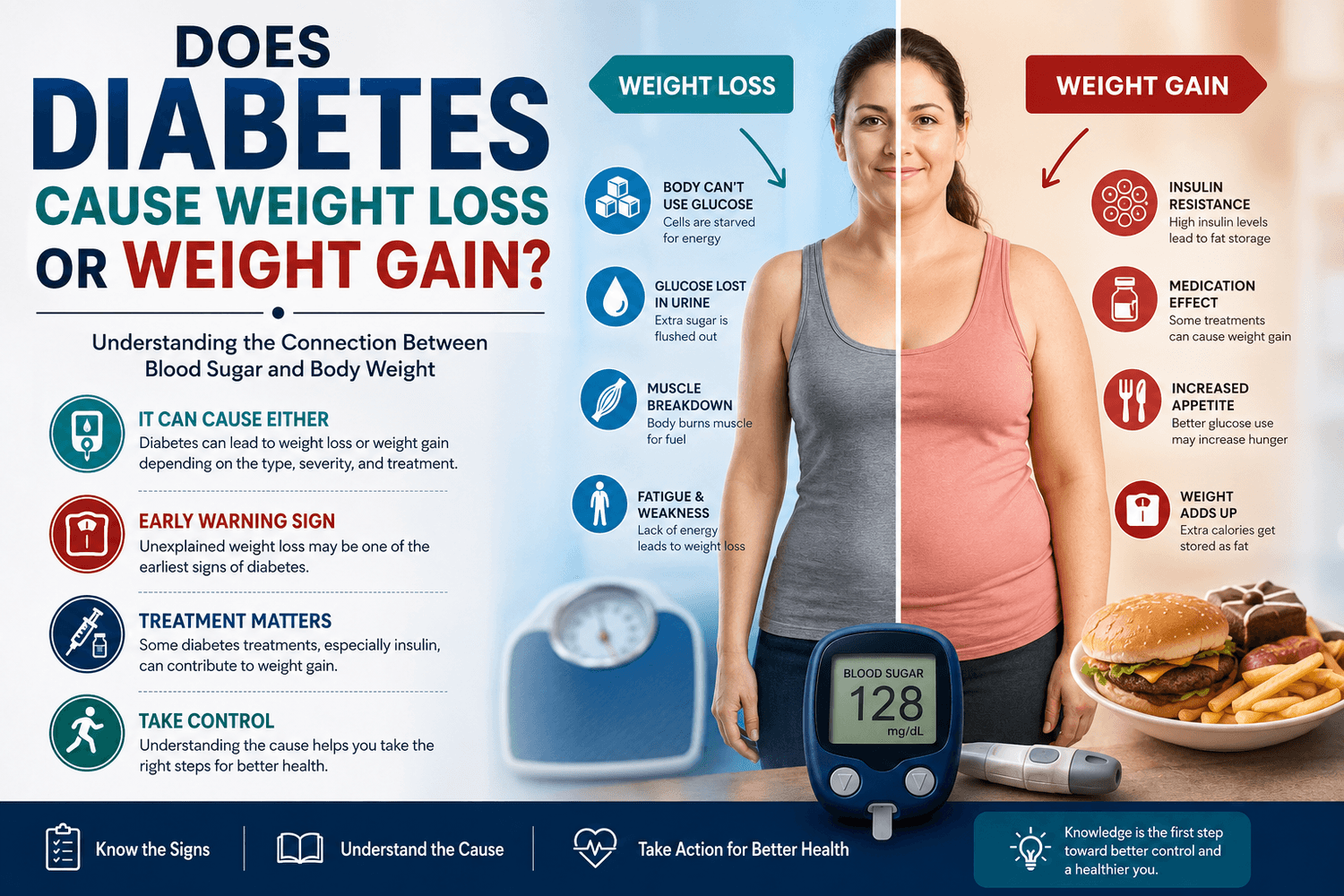
If you have been asking, “Does diabetes cause weight loss or weight gain?”, the honest answer is: it can cause either — depending on the type of diabetes, how advanced it is, and whether treatment has started.
That is where a lot of people get confused. Some people hear that diabetes causes rapid, unexplained weight loss. Others hear that people with diabetes often struggle with weight gain. Both statements can be true. The key is understanding why those changes happen.
In simple terms, untreated or newly developing diabetes can lead to weight loss, especially when the body cannot use glucose properly for energy. On the other hand, type 2 diabetes is strongly linked with overweight and obesity, and some diabetes treatments — especially insulin — can contribute to weight gain in certain people.
This topic matters because weight changes are often one of the earliest signs that something is wrong. For some people, unexplained weight loss may be a warning sign of diabetes. For others, gradual weight gain may reflect insulin resistance, lifestyle factors, or medication-related changes. Understanding the difference can help readers take action earlier and make better decisions for their health.
In this guide, we will break down exactly how diabetes affects body weight, why weight loss is more common in untreated type 1 diabetes, why weight gain is often tied to type 2 diabetes and insulin resistance, and what to do if unexpected changes appear on the scale.
The Short Answer: Yes, Diabetes Can Cause Both
Diabetes does not affect everyone the same way. In some people, it causes unintentional weight loss. In others, it is associated with weight gain. The difference usually comes down to three things:
The type of diabetes
Whether the diabetes is untreated or already being managed
How the body is responding to insulin and blood sugar
Major health authorities list losing weight without trying as a symptom of diabetes. At the same time, excess body weight is one of the biggest risk factors for type 2 diabetes, and insulin therapy can also lead to weight gain in some people.
Untreated diabetes may cause weight loss. Long-term insulin resistance, type 2 diabetes risk patterns, and some diabetes treatments may contribute to weight gain.
Why Diabetes Can Cause Weight Loss

Unexpected weight loss is one of the classic warning signs of diabetes, especially when it appears alongside symptoms like frequent urination, increased thirst, increased hunger, fatigue, and blurry vision.
What is happening inside the body?
Your body normally breaks food down into glucose, which enters the bloodstream. Insulin then helps move that glucose into your cells so it can be used as energy. But in diabetes, this system breaks down.
If the body does not make enough insulin — or cannot use insulin effectively — glucose builds up in the blood instead of entering the cells. That means the bloodstream may contain plenty of sugar, but the cells are still effectively “starving” for fuel.
When cells cannot access glucose properly, the body looks for backup energy sources. It begins breaking down fat and sometimes muscle tissue for fuel. Over time, that can lead to noticeable weight loss.
Calorie loss through urination
High blood sugar also causes the body to dump excess glucose into the urine. When that happens, calories are literally being lost through urination. This is one reason diabetes-related weight loss can happen even if someone is eating normally or even feeling hungrier than usual.
When excessive urination is paired with dehydration, the drop in body weight may appear even more dramatic.
Common signs that weight loss may be diabetes-related
Excessive thirst
Frequent urination
Unusual hunger
Persistent fatigue
Blurred vision
Slow-healing cuts or infections
Is Weight Loss More Common in Type 1 Diabetes?
Yes — weight loss is classically more associated with type 1 diabetes, especially before diagnosis.
Type 1 diabetes happens when the body attacks the insulin-producing cells of the pancreas. As insulin production falls, glucose cannot enter cells norm lly, so the body starts breaking down fat and muscle for energy.
The onset may be relatively sudden compared with type 2 diabetes. That is why unexplained weight loss in children, teens, or younger adults should never be brushed off casually, particularly when it appears with thirst, fatigue, and frequent urination.
Why type 1 diabetes weight loss can be dramatic
In type 1 diabetes, insulin deficiency can become severe quickly. Because insulin is essential for getting glucose into cells, the lack of insulin creates a fast-moving metabolic problem.
In some cases, it can progress to diabetic ketoacidosis, a serious complication requiring urgent medical care.
So when people ask whether diabetes causes weight loss, the clearest “yes” is often in the context of undiagnosed or untreated type 1 diabetes.
Can Type 2 Diabetes Also Cause Weight Loss?
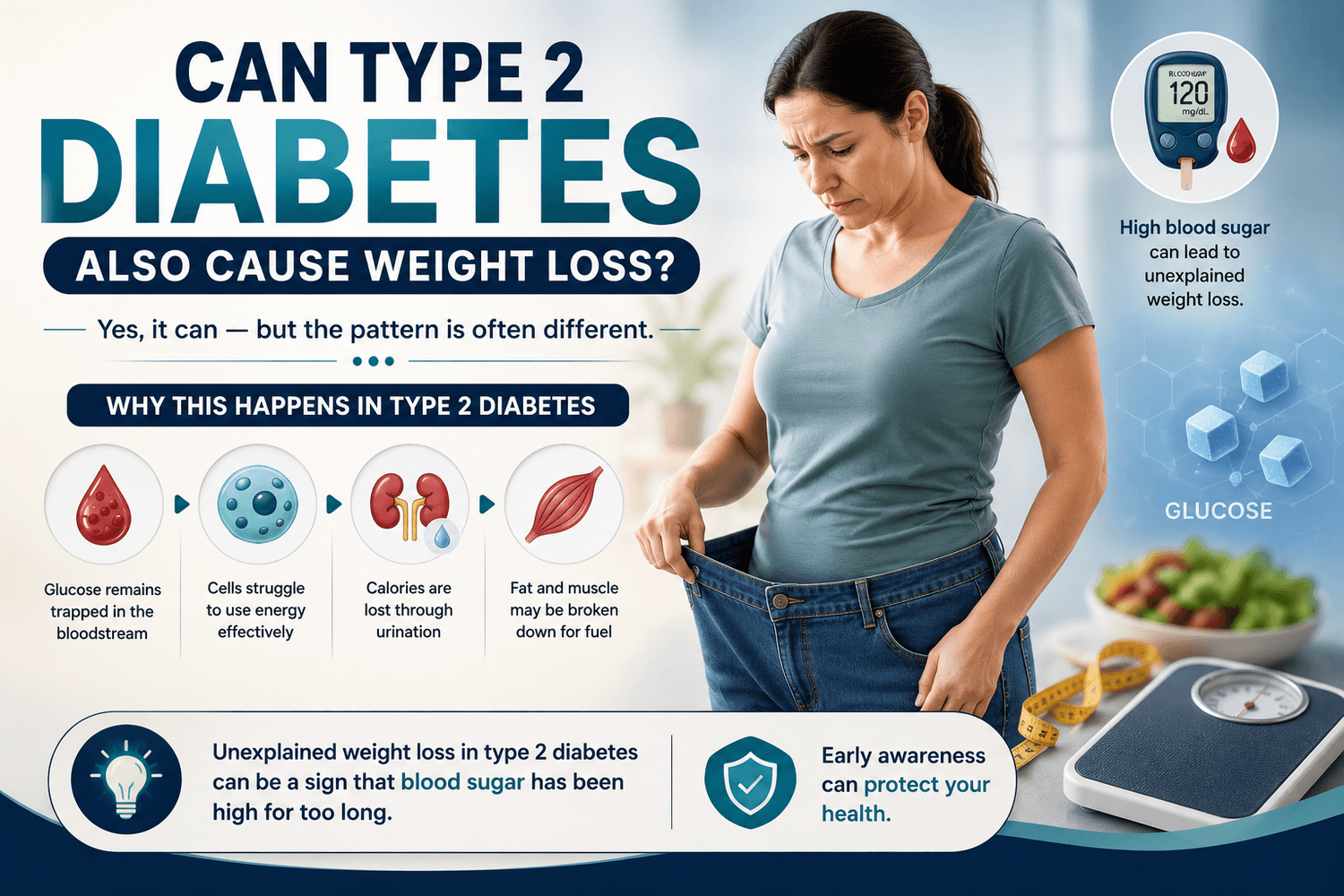
Yes, it can — but the pattern is often different.
Type 2 diabetes symptoms usually develop more slowly. Some people may have type 2 diabetes for years without realizing it. Still, unexplained weight loss can happen in type 2 diabetes, especially when blood sugar levels have been high for a long time.
Why this happens in type 2 diabetes
In type 2 diabetes, the issue often begins with insulin resistance. That means the body is making insulin, but the cells are not responding to it properly. Over time, the pancreas may not be able to keep up, and blood sugar rises. Once blood sugar remains elevated long enough, the same mechanisms seen in other forms of diabetes can begin to happen:
Glucose remains trapped in the bloodstream
Cells struggle to use energy effectively
Calories are lost through urination
Fat and muscle may be broken down for fuel
However, because type 2 diabetes usually develops gradually and is strongly tied to long-term metabolic and lifestyle factors, many people associate it more with weight gain than weight loss.
Why Diabetes Is Also Linked With Weight Gain
While untreated diabetes can cause weight loss, type 2 diabetes is also strongly associated with overweight and obesity.
For many people, the broader picture looks like this:
Weight gain contributes to insulin resistance
Insulin resistance raises the risk of prediabetes and type 2 diabetes
Once diabetes is diagnosed, some treatments and lifestyle factors may make weight management harder
That means diabetes and body weight can have a two-way relationship. Weight can influence diabetes risk, and diabetes management can influence weight.
Insulin resistance and weight gain
Insulin resistance is central to type 2 diabetes. When the body becomes less responsive to insulin, the pancreas tries to compensate by producing more. Over time, this metabolic imbalance is often connected with abdominal fat gain, appetite disruption, and reduced energy regulation.
This is one reason why many people with prediabetes or early type 2 diabetes may notice weight gain before diagnosis rather than weight loss.
Can Diabetes Medication Cause Weight Gain?
Yes. This is especially true for insulin therapy in some patients.
That does not mean insulin is harmful or should be avoided. It means the body is finally able to use glucose more effectively again, and if calorie intake exceeds what the body needs, the excess can be stored as fat.
Why insulin can lead to weight gain
More glucose moves from the bloodstream into the cells
Less sugar is lost in the urine
The body becomes more efficient at storing and using energy
That is good for blood sugar control. But if a person eats more calories than needed, weight gain can happen.
Not all diabetes medications affect weight the same way. Some are more weight-neutral, and some may even support weight loss in appropriate patients, depending on the clinical situation.
What About Prediabetes and Weight Gain?
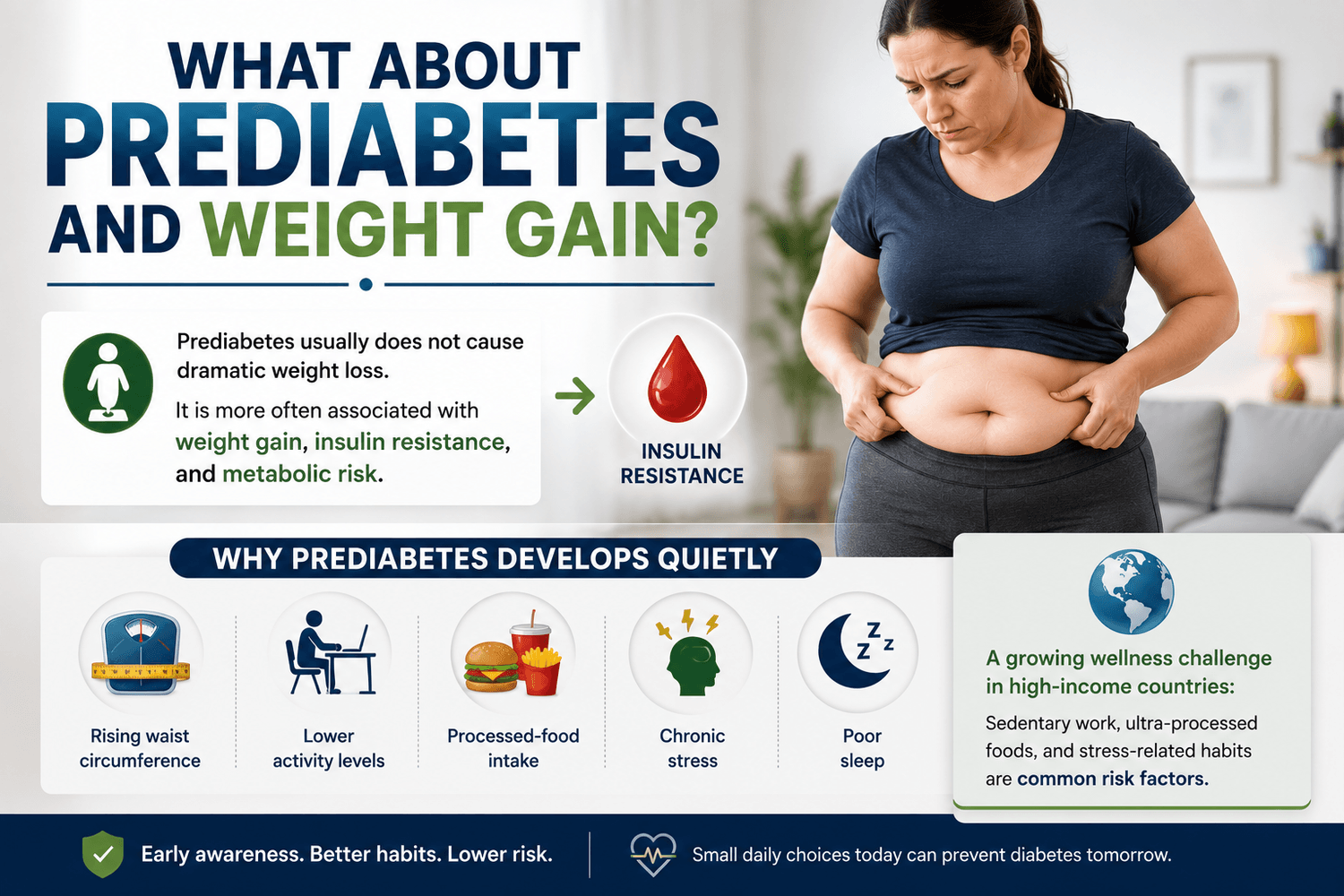
Prediabetes usually does not cause dramatic weight loss the way untreated type 1 diabetes can. Instead, prediabetes is more often associated with weight gain, insulin resistance, and metabolic risk.
For many people, prediabetes develops quietly through rising waist circumference, lower activity levels, poor sleep, processed-food intake, chronic stress, and early insulin resistance patterns — long before obvious symptoms appear.
That makes this topic especially relevant for readers in English-speaking high-income countries where sedentary work, ultra-processed foods, and stress-related habits are common wellness challenges.
When Weight Loss With Diabetes Is a Warning Sign
Not all weight loss is healthy.
If someone is losing weight without trying, especially if it is happening quickly or along with increased thirst, frequent urination, fatigue, or blurred vision, it is important to get evaluated.
Seek prompt medical care if you notice:
Sudden or rapid unexplained weight loss
Excessive thirst
Urinating far more often than usual
Nausea or vomiting
Stomach pain
Confusion
Unusual tiredness
Fruity-smelling breath or signs of dehydration
These can be signs of severe high blood sugar and, in some cases, diabetic ketoacidosis.
How to Manage Weight Safely If You Have Diabetes
The goal is not just to lose weight or avoid weight gain. The goal is to achieve stable blood sugar, healthy metabolic function, and sustainable body composition.
1. Focus on blood sugar control first
If diabetes is uncontrolled, the scale can be misleading. A person may be losing weight, but that does not mean they are healthy. Unintentional weight loss may reflect worsening metabolic dysfunction rather than improvement.
2. Build meals around consistency
Practical meal habits include monitoring calorie intake, choosing nutrient-dense foods, avoiding skipped meals, and planning balanced plates with vegetables, protein, fiber-rich carbohydrates, and healthy fats.
3. Be physically active regularly
Physical activity helps improve insulin sensitivity and supports weight management.
4. Review medications with a clinician
If diabetes treatment appears to affect appetite or body weight, discussing options with a qualified healthcare provider can be helpful.
5. Do not self-adjust insulin to lose weight
Reducing or skipping insulin to avoid weight gain is dangerous and can lead to serious complications.
Does Diabetes Cause Belly Fat?
Diabetes itself does not directly “create belly fat” in a simple one-step way, but type 2 diabetes is closely tied to insulin resistance, and insulin resistance is often associated with increased abdominal fat. That is one reason waist size matters in metabolic health discussions.
For many readers, this is the most important distinction: unexplained weight loss can be a warning symptom of diabetes, while long-term weight gain and abdominal fat are often risk factors for developing insulin resistance and type 2 diabetes in the first place.
Frequently Asked Questions
Yes. Sudden or unexplained weight loss can happen when the body cannot use glucose properly for energy and starts breaking down fat and muscle instead.
Weight gain is not usually considered a classic direct symptom in the same way as thirst or frequent urination, but it is strongly connected to insulin resistance and type 2 diabetes risk. Some diabetes treatments can also contribute to weight gain.
Because insulin helps the body use glucose more effectively, less sugar is lost through urine and more energy is retained. If calorie intake exceeds need, that can lead to weight gain.
No. Some people with type 2 diabetes gain weight, some lose weight, and some notice very little change. Symptoms vary from person to person.
Yes, especially if the weight loss is rapid or accompanied by thirst, fatigue, blurry vision, or frequent urination. That combination should be medically evaluated.
Final Verdict
Does diabetes cause weight loss or weight gain? Both are possible.
Weight loss is more commonly seen when diabetes is untreated or poorly controlled, especially in type 1 diabetes, because the body cannot properly use glucose and starts breaking down fat and muscle for fuel.
Weight gain is more commonly associated with type 2 diabetes risk, insulin resistance, and in some cases diabetes treatment such as insulin therapy.
The most important takeaway is this: unexpected weight change should not be ignored. Whether the scale is going sharply down or steadily up, the body may be signaling a blood sugar problem that deserves attention.
References & Editorial Note
The article content in this PDF was grounded in authoritative public health and medical references used during the research stage.
CDC — Symptoms of Diabetes: https://www.cdc.gov/diabetes/signs-symptoms/index.html
CDC — Diabetes Overview: https://www.cdc.gov/diabetes/about/index.html
NIDDK — Symptoms & Causes of Diabetes: https://www.niddk.nih.gov/health-information/diabetes/overview/symptoms-causes
NHS — Type 2 Diabetes Symptoms: https://www.nhs.uk/conditions/type-2-diabetes/symptoms/
MedlinePlus — Type 1 Diabetes: https://medlineplus.gov/diabetestype1.html
MedlinePlus — Type 2 Diabetes: https://medlineplus.gov/diabetestype2.html
Mayo Clinic — Diabetes Symptoms: https://www.mayoclinic.org/diseases-conditions/diabetes/in-depth/diabetes-symptoms/art-20044248
Mayo Clinic — Insulin and Weight Gain: https://www.mayoclinic.org/diseases-conditions/diabetes/in-depth/insulin-and-weight-gain/art-20047836
NIDDK — Adult Overweight and Obesity: https://www.niddk.nih.gov/health-information/weight-management/adult-overweight-obesity
SHARE


© Copyright 2026 - All Rights Reserved
Privacy | Terms and Conditions | Disclaimer
This site is not a part of the Facebook website or Facebook Inc. Additionally, This site is NOT endorsed by Facebook in any way. FACEBOOK is a trademark of FACEBOOK, Inc.
FDA Compliance
The information on this website has not been evaluated by the Food & Drug Administration or any other medical regulatory body. We do not aim to diagnose, treat, cure, or prevent any illness or medical condition. Information shared here is for educational purposes only. You must consult your physician or other qualified healthcare professional before acting on any information on this website, especially if you are pregnant, nursing, taking medication, or have a medical condition. Results May Vary: Individual results and testimonials featured on this site are not a guarantee of specific outcomes. Results may vary based on individual factors including age, genetics, diet, lifestyle, medical history, and adherence to any program or routine discussed. Privacy Protection: Some names and personal identifying details featured in stories and testimonials have been changed to protect individual privacy and confidentiality. No individual result should be considered typical or guaranteed. Always seek professional medical advice for health concerns.
Some names and personal identifying details have been changed to protect privacy.
No individual result should be considered typical.
Enjoy & Thank you!